

Show Notes
Cool kids are covered in ink

“The tools don’t make the artist.”
This is a quote that I hear very often while listening to podcasts and interviews with other creatives. While I certainly understand the sentiment, basically explaining that you can’t become a great artist by buying an almighty tool, I think that the saying is actually quite inaccurate. Of course, you need years of practicing the craft before you can even shake the imposter syndrome, but there’s something to be said about the tools that you use to make comics.
Tools not having a hand in the practice is like telling a chef that their unique blend of spices or cookware has nothing to do with the final meal. Sure, it won’t determine critical reception, but I guarantee that having a well-made knife in the kitchen helps workflow and presentation. Ultimately, the tools inform the skills and bring nuance to your creations.
I’d like to share a little bit about my art tools. When it comes to comics, I look at line work on a spectrum where the two extremes are a traditional/refined line and a nontraditional/energetic line, then there’s a massive number of labels that exist in between those two, mostly categorized by specific artists and eras. I tend to lean towards the more nontraditional style, kind of feeling out the artwork in the moment and not being too tied down to making things look perfect, but there are certainly other styles that experiment more than I do. In the end, it’s all about what speaks to you while drawing, and I’d even go as far as saying how you want to “brand” yourself.
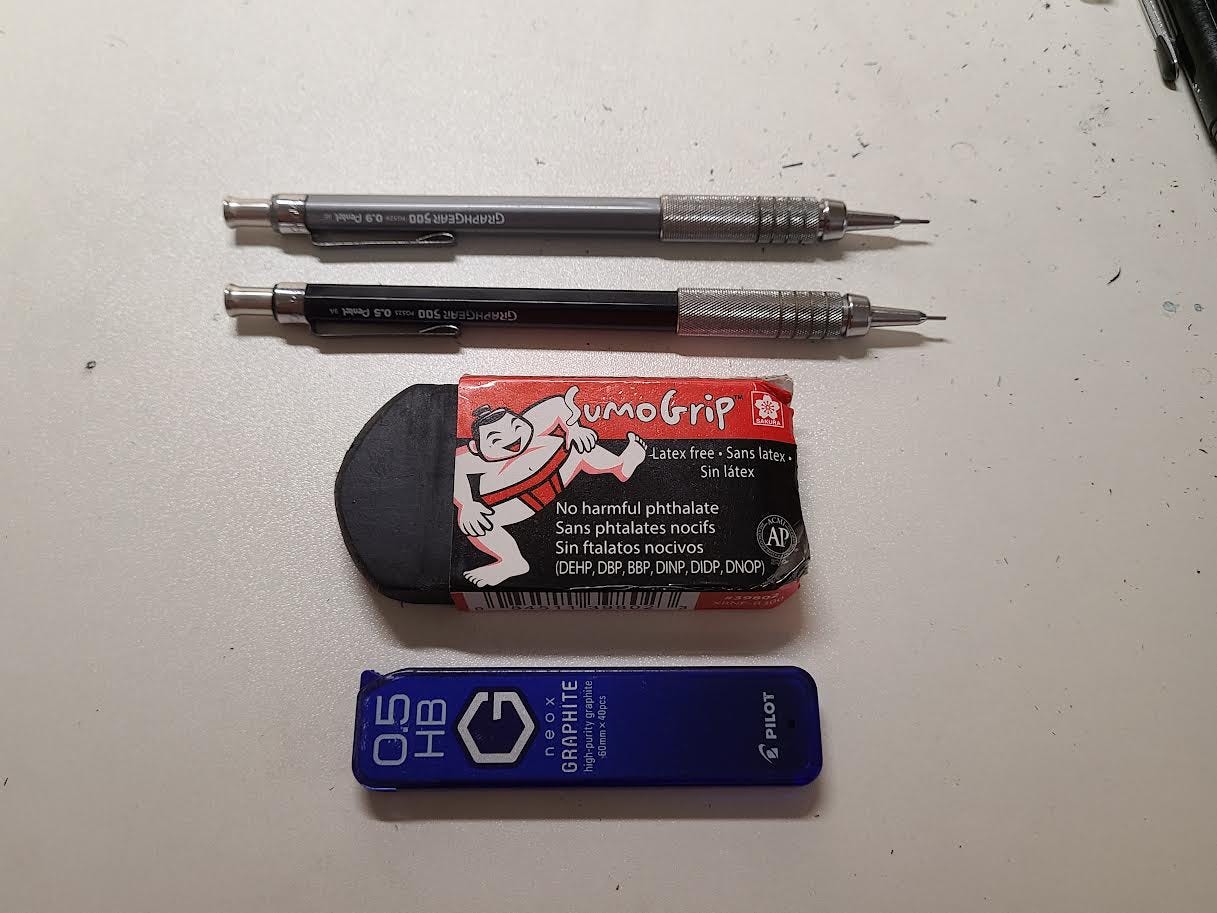
I’ve stuck with this pencil since day 1 of making comics and it hasn’t failed me yet. Both Pentel, one is 0.5 lead, and the other is 0.9. I like these drafting mechanical pencils because I can get down in the details without having to sharpen every few strokes. The Sumo eraser is a beast and a blessing on 11 x 17 boards.
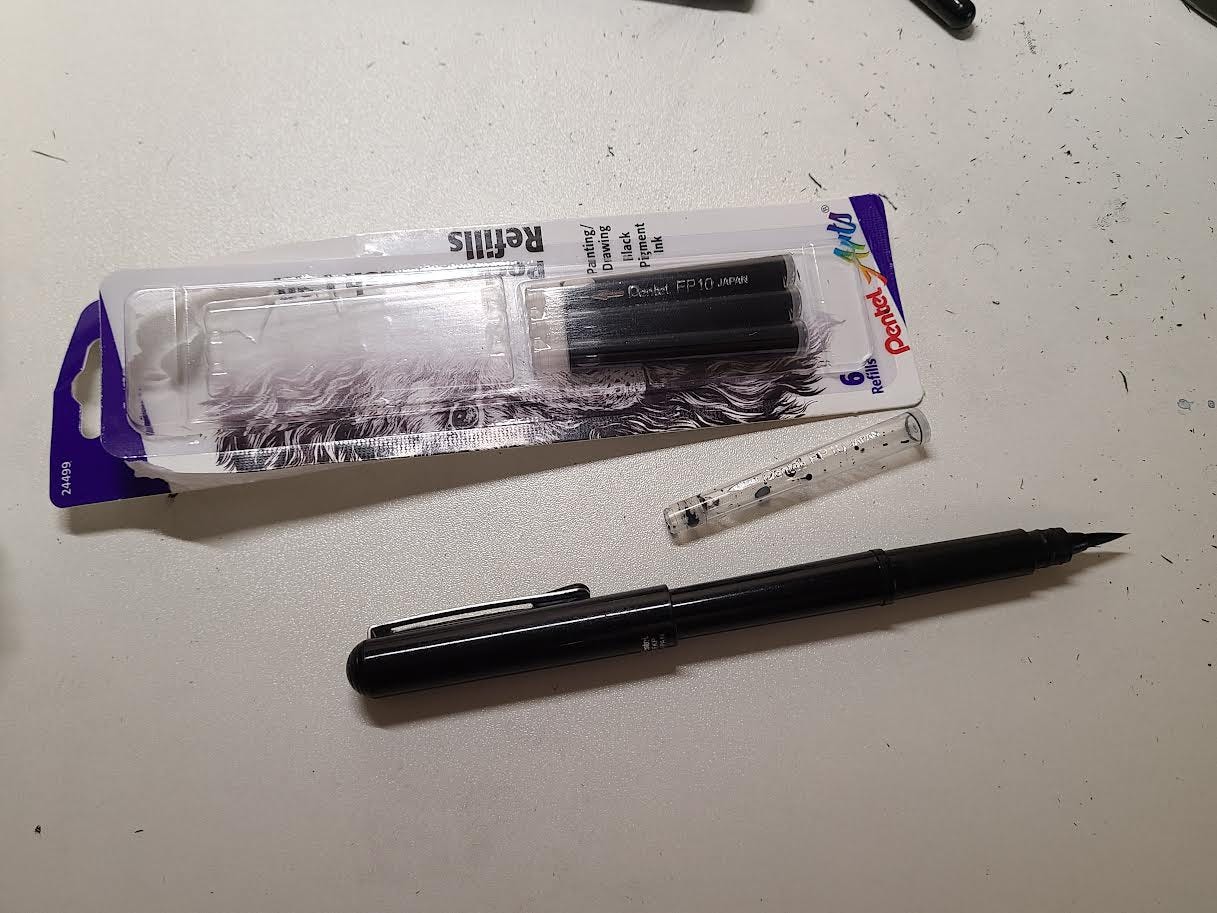
This is my Excalibur. My main squeeze when it comes to inking. The Pentel Pocket Brush.

My main figure work comes from this guy. It has taken a bit of time to get comfortable with because the brush can be very sensitive, but it gives me the exact amount of energy and form that I’m looking for in my work. I’ve tried similar brush pens, like the Kuretake, but this one takes the cake. Plus, the refill cartridges are easy to work with and the ink is nice and full.
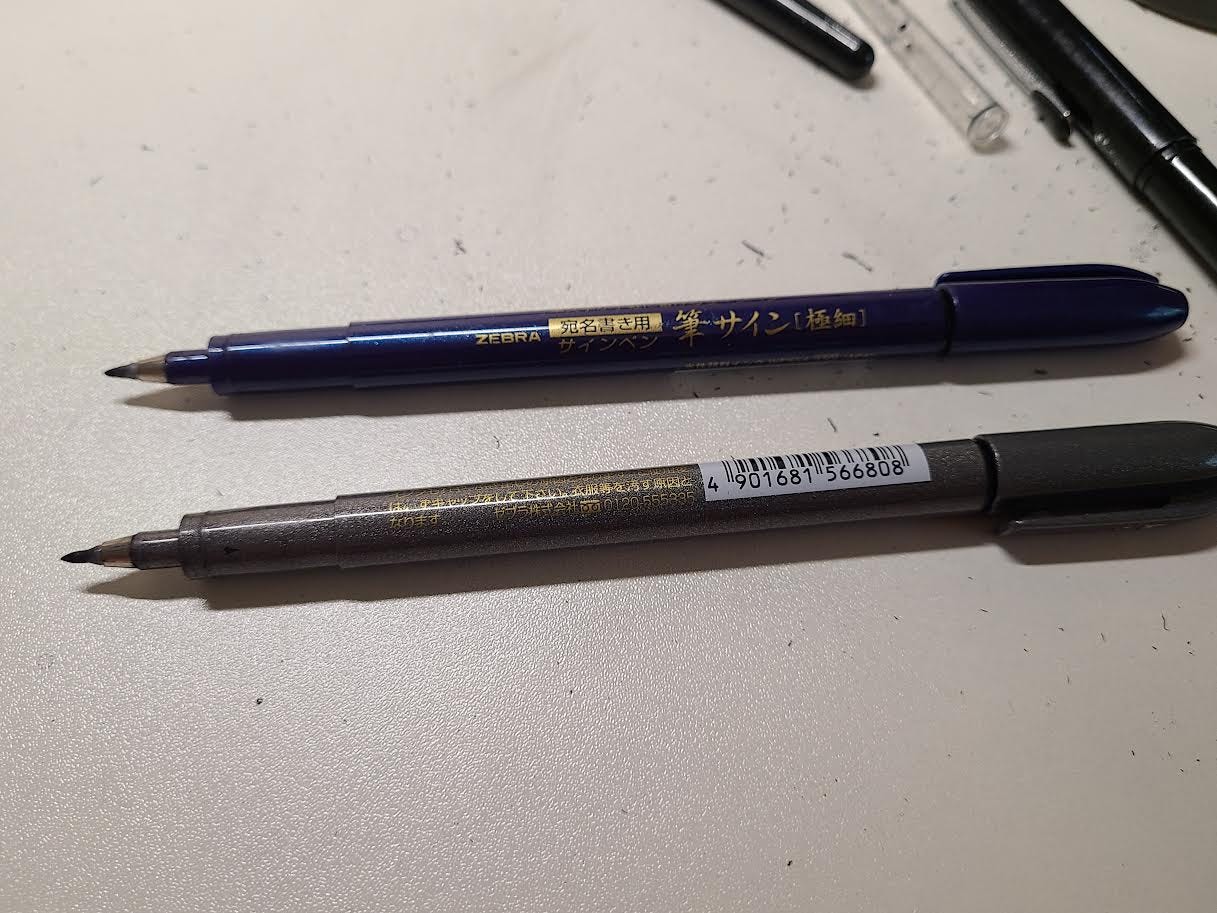
These two non-refillable Zebra brush pens are incredible. They hold a very smooth line and can achieve some really slick contours. I use the gray one (fine tip) for face details and smaller line work, and I love using the blue one (extra fine tip) for background details, especially outdoor settings. These things are fun and have tons of control, very different from the Pentel Pocket Brush.

Microns and Copic liners, all various sizes. I use these mostly for backgrounds and all-around detailing such as cross hatching, shading, and other markings that achieve texture on the page.
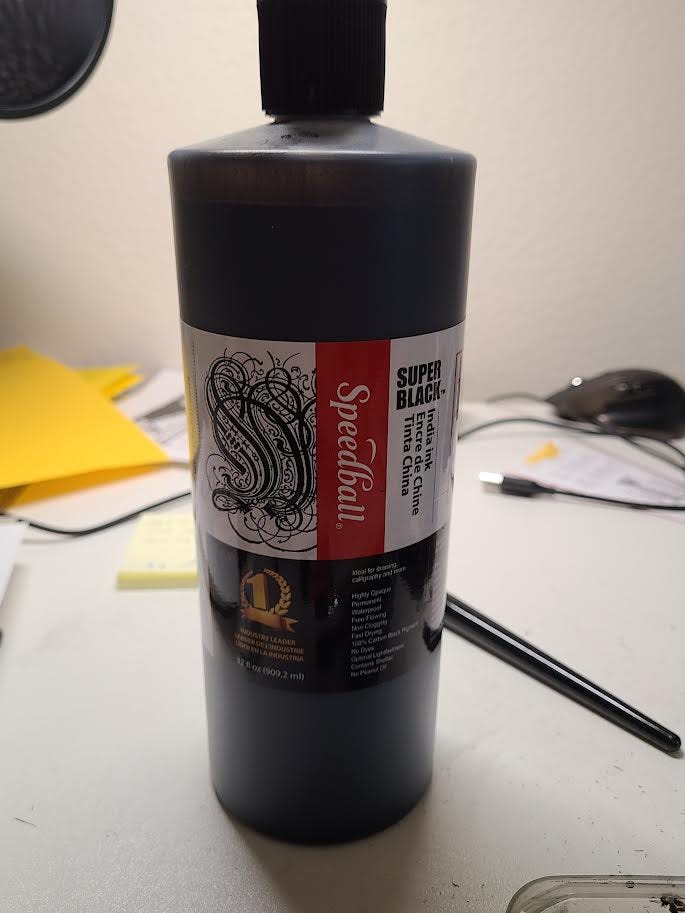
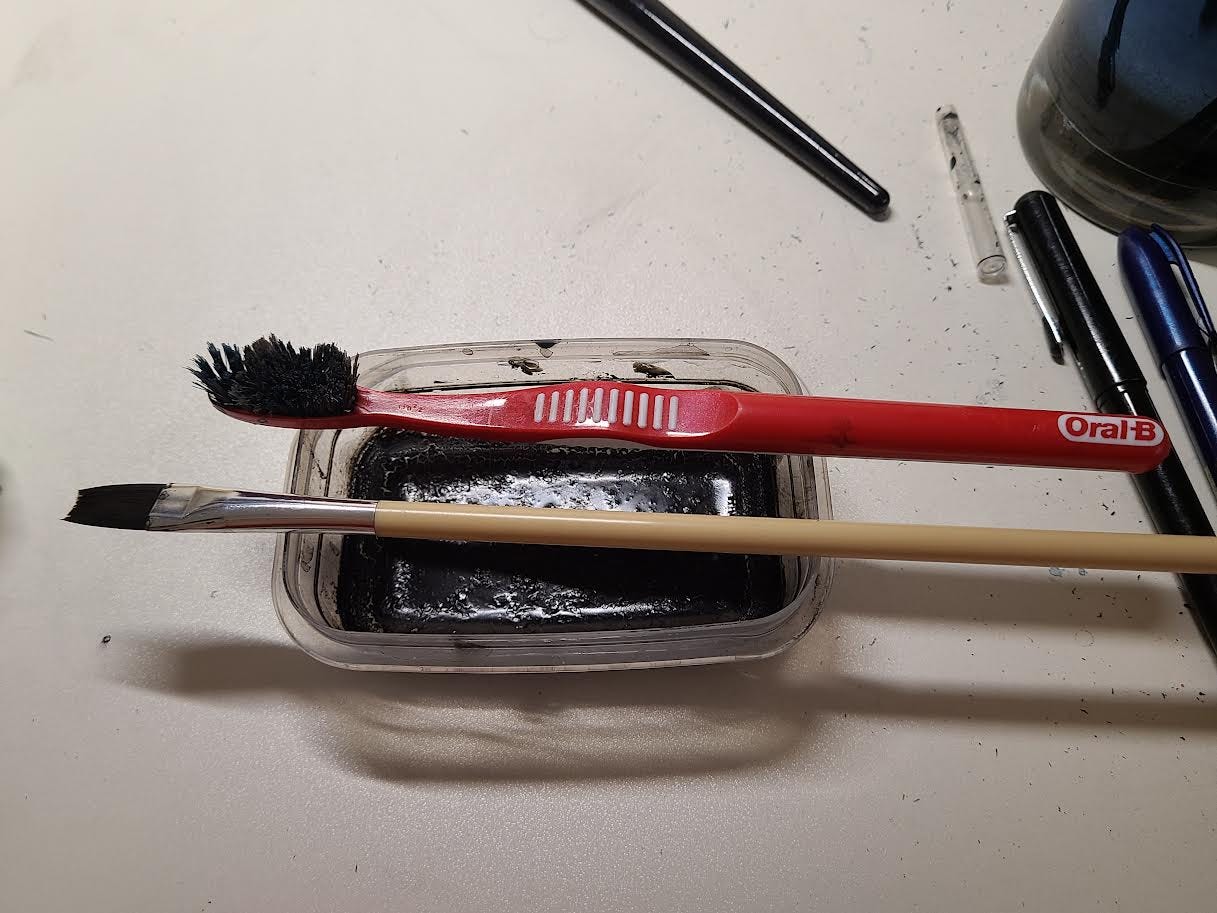
This speed ball ink is used for spotting heavy blacks. It’s not my favorite ink, but it gets the job done in place of using my pocket brush. Quantity over quality with this one. Also, there’s a cheap ink brush that is amazing and an old toothbrush for weird texture and splatters. Yes, I am covered in ink most of the time when using these.

Lastly, when I do traditional coloring, I like using watercolor. These here are Holbein. They are a bit on the expensive side, but you can really get some beautiful work out of them. Word is that Holbein watercolors are the painting choice of Hayao Miyazaki (of Studio Ghibli fame). So, yeah, they must be amazing.
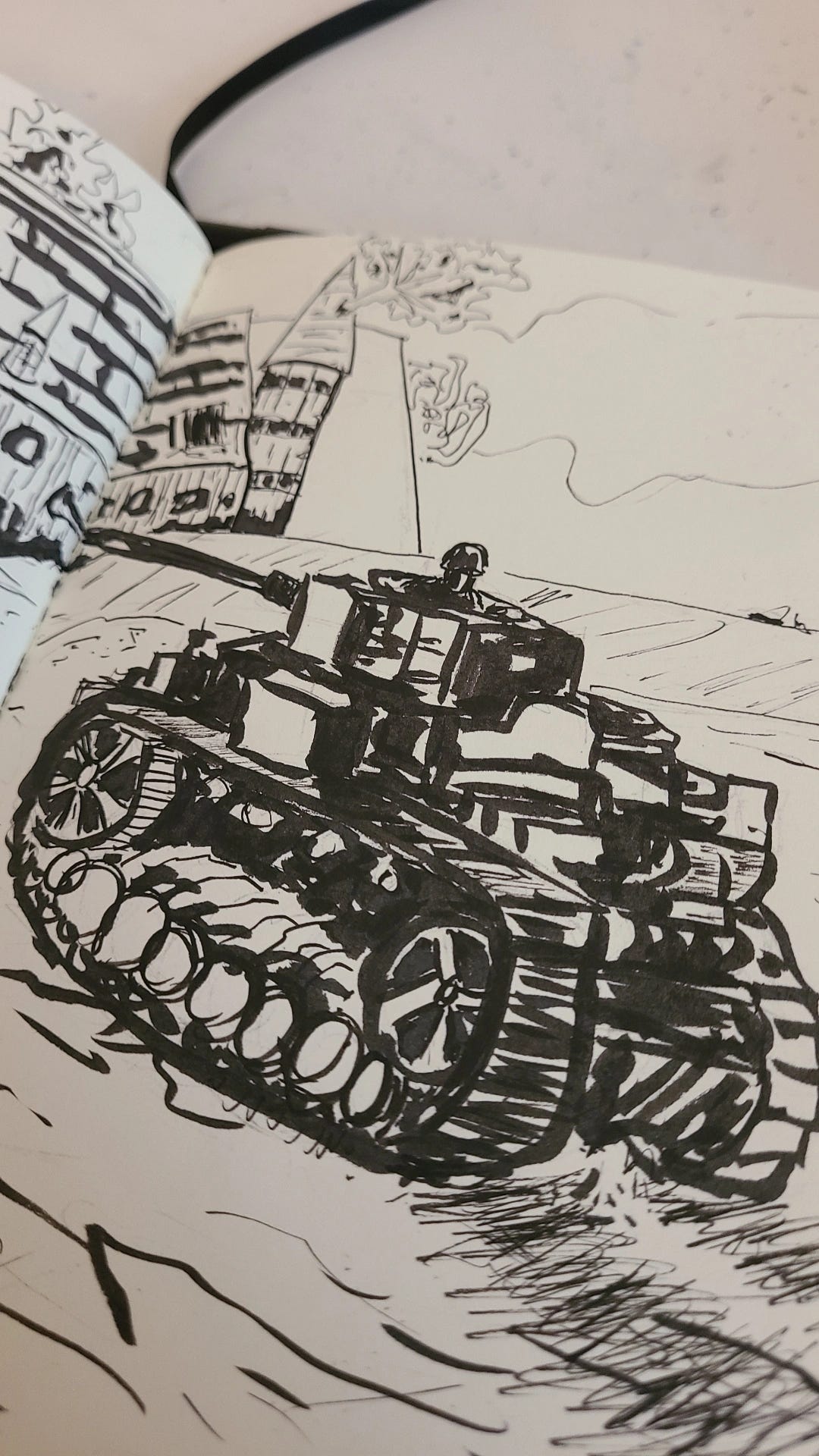
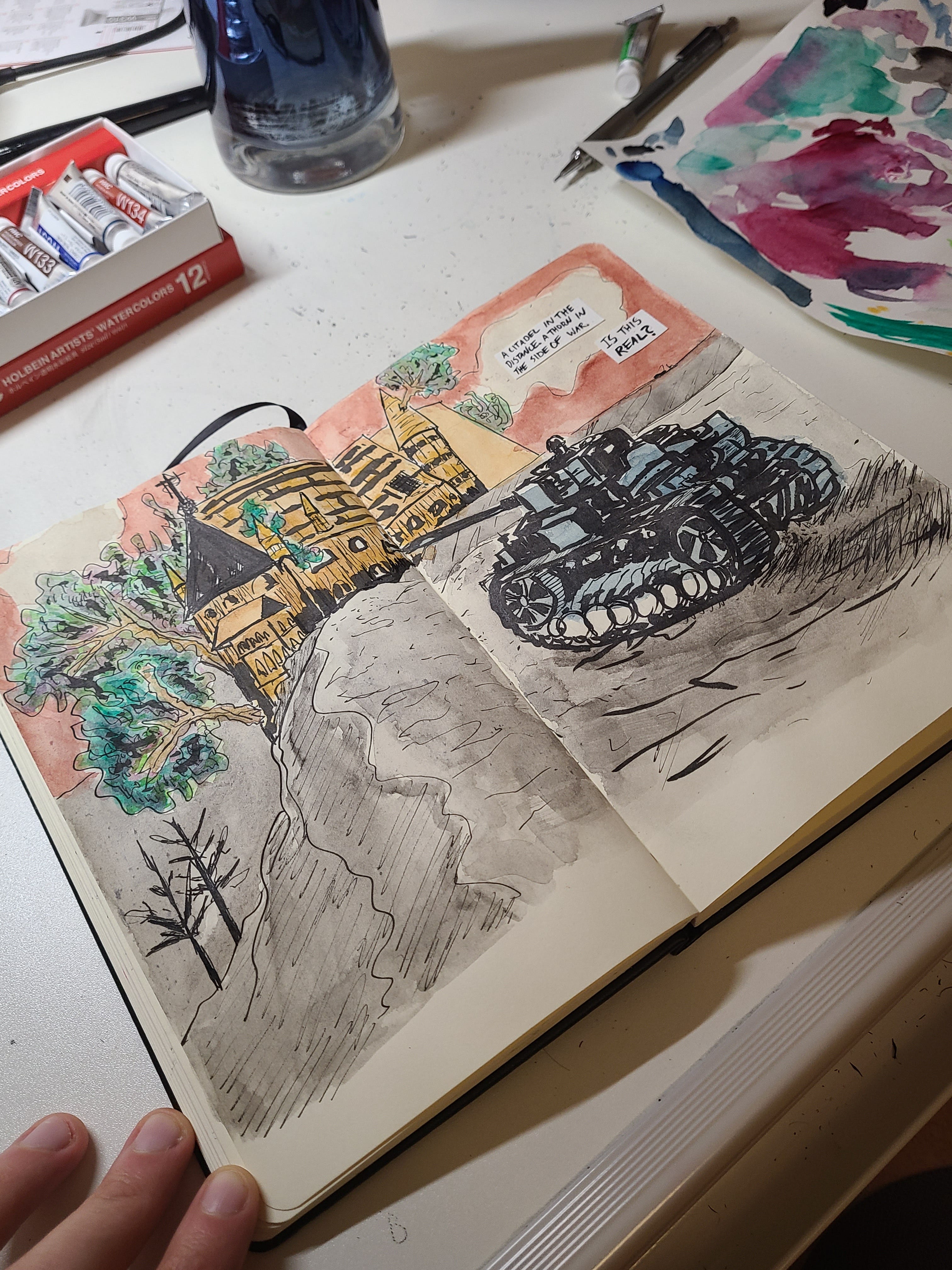
Here’s a piece that I did in my sketchbook this weekend which uses all of the tools that I mentioned above. You can see that the tank is bolder and interlaced with heavier black, done with the Pentel pocket brush. I used the Zebra pens for the citadel and trees, then the liners for the other background components. I didn’t go too heavy with the blacks so that I could pull everything together with the watercolor.
That does it for this quick run through of some of my art tools. I didn’t go into the digital side of my work, i.e. Ipad and software, which is just as important in my comic making. I’ll save that content for another time. I wanted to do this because I do feel that supplies can help you achieve a certain “look” to your artwork, which lends to your uniqueness as an artist ( a good example is the incredible Frank Quitely). So, in whatever craft you pursue, experiment like crazy. You’ll be able to find what you like and what you absolutely despise (looking at you, unabashed Sharpie user).
On a side note, it looks like Substack is actually implementing a new video feature where writers can embed video content directly into a post. This sounds awesome because I’m always looking for better ways to connect with readers, and video does so at such a different level. I’m pretty excited for that.
Thanks for your time,
Nico
Love seeing what artist use and what pens and ink! I remember seeing an artist at Comicpalooza using a toothbrush for the first time, that was soooo long ago!!